
Book Review: Simone Weil’s anti-fascist blueprint
Ros Schwartz’s translation of The Need for Roots makes Weil’s masterpiece feel as urgent today as it was in 1943.
. . . . Schwartz’s updated translation makes Weil’s call for theological creativity in the struggle against fascism feel as urgent today as it was in 1943. At the sentence level, Schwartz opts for readability and liveliness over the literalness of Arthur Wills’s 1952 translation. But Schwartz also preserves the unfinishedness of Weil’s project. When The Need for Roots first appeared in France in 1949, its editors not only gave it a more commercial title (Weil called it “Prelude to a Declaration of Obligations Towards the Human Being”) but patched up the gaps and unfinished sentences and organized the book into three neat sections. Schwartz, on the other hand, lets fragments hang and preserves the original manuscript’s lack of structure. Weil’s prélude doesn’t even properly end; its final sentence is an unfinished fragment, a thought trailing off into nothing. Schwartz rightly keeps this ending. The unfinishedness of the text dramatizes Weil’s transformation of greatness, her looking for God in risk and transience rather than mastery and certainty.
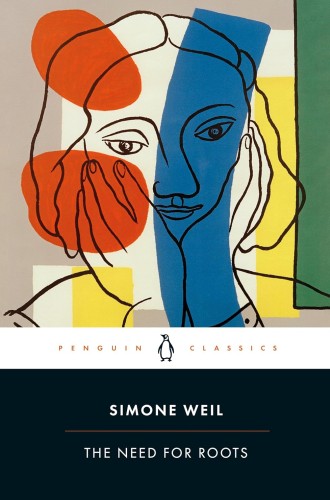
Weil was a troubled and complicated writer, and The Need for Roots is a troubled and complicated text. We might not want to live in the society she imagined or follow her theology to its bleak and shadowed depths. But we, like her, live in an age when calls to make Christendom great again are growing deafening. We need the courage to risk new kinds of thinking—about ourselves, our roots, our communities, and our obligations; about God’s relationship to us and our relationships with each other. For this kind of risky thinking, The Need for Roots really is a blueprint.
Mac Loftin, Simone Weil’s anti-fascist blueprint, The Christian Century (March 2025)
1 Recommendation